Geophysical investigations for railways
Understanding what lies beneath a railway is essential when planning construction or maintenance. Ground penetrating radar (GPR), electrical resistivity and seismic surveys help engineers investigate the track bed, embankments and underlying ground, providing information about conditions that may affect the railway’s performance.
Railway networks vary widely in age, construction and condition. As a result, maintaining safe, reliable routes for passenger and freight traffic requires a clear understanding of where problems may develop. Geophysical railway investigations complement drilling and sampling by revealing changes between investigation points and helping teams plan further checks and maintenance.
What should a railway investigation reveal?
Whether you are planning a new railway or maintaining an existing route, the aim is to understand the conditions that affect the track’s safety, stability and long-term performance. Key questions include:
- Ground stability: Are there weak layers or ground conditions that could lead to settlement?
- Water and drainage: Is drainage working effectively, or are there wet and potentially unstable zones?
- Ballast condition: Is the ballast clean and able to support the track, or has fine material accumulated within it?
- Hidden defects: Are there voids, erosion or buried obstructions?
- Embankments and transitions: Are there unstable sections or changes in the track bed that need closer investigation?
- Construction quality and condition over time: Was the railway built as intended, and how is it changing with age and use?
Understanding conditions between investigation points
Ground investigations for new railways often rely on drilling and sampling at intervals along the proposed route. Similarly, maintenance investigations typically examine the railway embankment and underlying ground at selected locations.
These techniques provide detailed information at each investigation point. However, they leave gaps where changes in the ground may go undetected. This uncertainty can affect decisions about both construction and maintenance.
Geophysical surveys help fill those gaps. By collecting information along the route, they place individual samples in a wider context and help identify sections that deserve closer attention.
These gaps are not only spatial – they also occur between visits, as ground conditions change over time. Where earlier surveys have highlighted a problem area, a permanently installed resistivity system (for example using an ABEM Terrameter LS 2) can take repeated measurements automatically, helping to track changes associated with moisture, groundwater movement or other subsurface processes. This extends the value of geophysics beyond a single investigation, supporting ongoing monitoring and helping railway operators recognise developing problems and decide when closer inspection is needed.
How geophysics supports railway construction and maintenance
GPR, resistivity and seismic methods provide different types of information about the track bed and surrounding ground. Depending on the survey objectives and site conditions, they can help address the following:
- Ground stability and subgrade conditions: GPR, resistivity, and seismics.
- Water and drainage problems: Resistivity.
- Ballast condition: GPR and resistivity.
- Voids, washouts and hidden defects: GPR and resistivity.
- Transitions and variations in track bed structure: GPR, resistivity, and seismics.
- Embankment and slope conditions: Resistivity and seismics.
- Monitoring changes over time: Resistivity and GPR.
- Construction quality control: GPR and resistivity.
- Ballast – subgrade interface: GPR, resistivity, and seismics.
Together with geotechnical investigations, these methods help build a more complete picture of railway conditions. The most suitable approach depends on the questions you need to answer and the materials and conditions at the site.
GPR for Railway Investigations
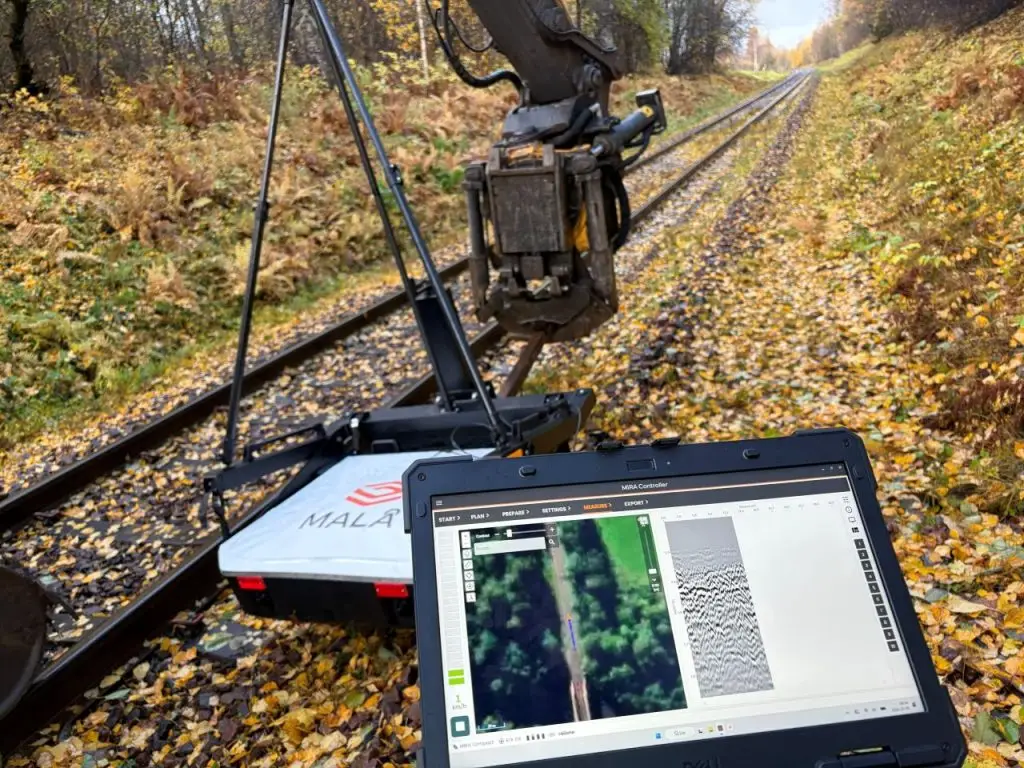
Ground Penetrating Radar provides information about the layers and features within the track bed and shallow ground. It can support investigations before construction, quality checks during construction and maintenance planning throughout the railway’s life.
Before construction
Before work begins, GPR can help investigate soil layers, depth to bedrock and peat thickness, where ground conditions allow sufficient radar penetration. This information contributes to the understanding of conditions along the proposed route.
During construction
During construction, GPR can support quality control by assessing the thickness of ballast, sub-ballast and subgrade layers. Where the boundaries between these layers can be identified, the results can be compared with design specifications.
For maintenance
For existing railways, GPR can help teams assess track bed condition and target maintenance more effectively.


Applications include:
- Assessing ballast condition: Investigating ballast thickness and variations associated with fouling or degradation to help identify sections that may need cleaning or replacement.
- Investigating voids and loss of support: Identifying anomalies for further assessment.
- Mapping track bed structure: Building a continuous profile of ballast, sub-ballast and subgrade layers along surveyed sections.
- Planning maintenance: Surveying longer sections of track to help prioritise work according to actual conditions and support predictive maintenance strategies.
- Locating buried utilities and obstacles: Investigating features that may affect planned work.
- Inspecting railway infrastructure: Investigating bridges, tunnels, stations and viaducts with an appropriate survey setup.
- Reviewing geotextile separation performance: Where geotextiles are used to keep track bed materials separate, GPR can help investigate signs of intermixing. Changes in the clarity and continuity of layer boundaries may indicate ballast fouling or disturbance at the base of the ballast, helping target checks for mud pumping or ballast intrusion into the underlying ground. Comparing surveys over time can help assess whether the intended separation is being maintained.
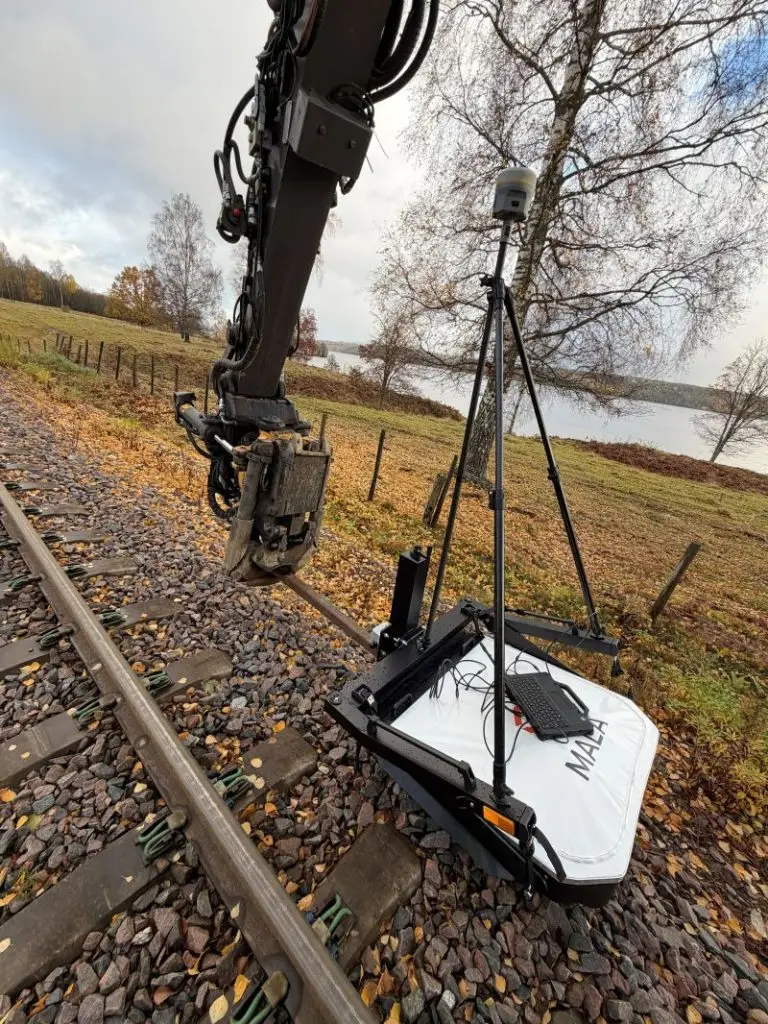
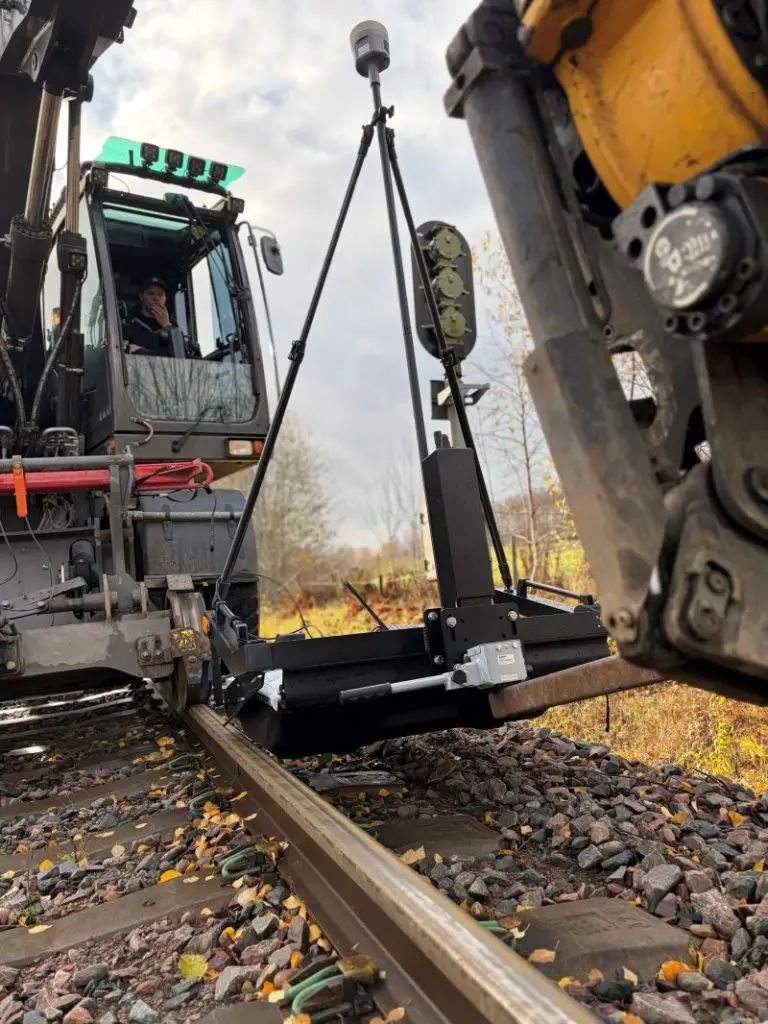
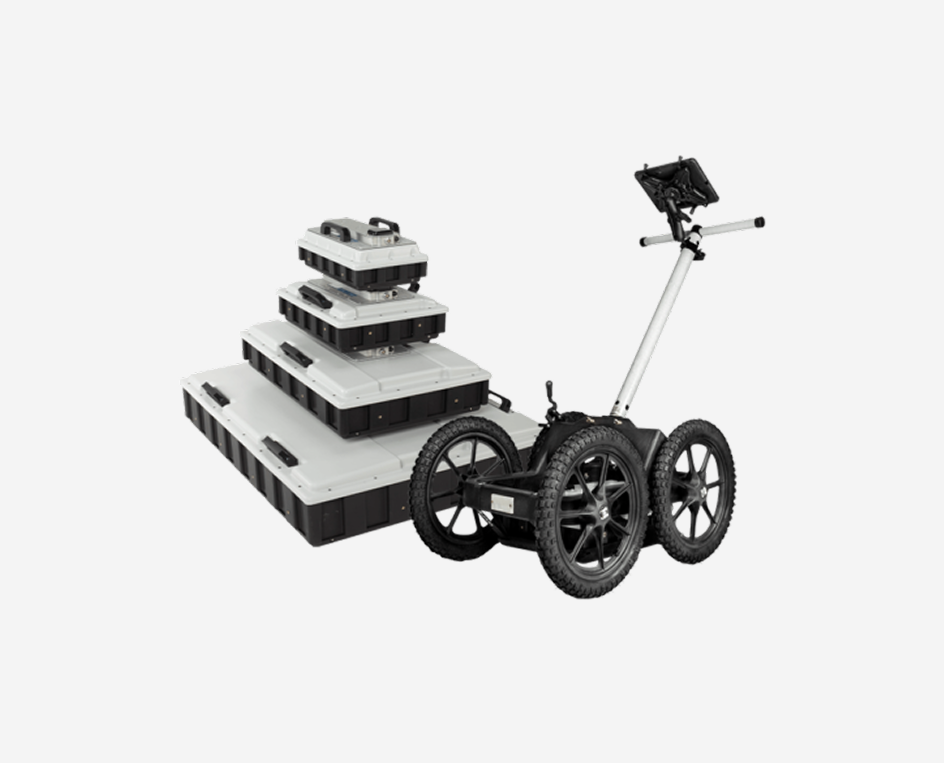
The choice of antenna frequency and survey setup depends on the target, required depth and ground conditions. Data can be collected on foot or using a suitable vehicle-mounted system. In either case, the survey needs to be designed around the features you want to investigate.
Find out more about the Method: Ground Penetrating Radar
Resistivity for Railway Investigations
Electrical resistivity surveys reveal variations in the ground’s electrical properties. These variations can help investigate geological layers and moisture conditions beneath and beside a railway, making the method useful for both construction planning and maintenance.
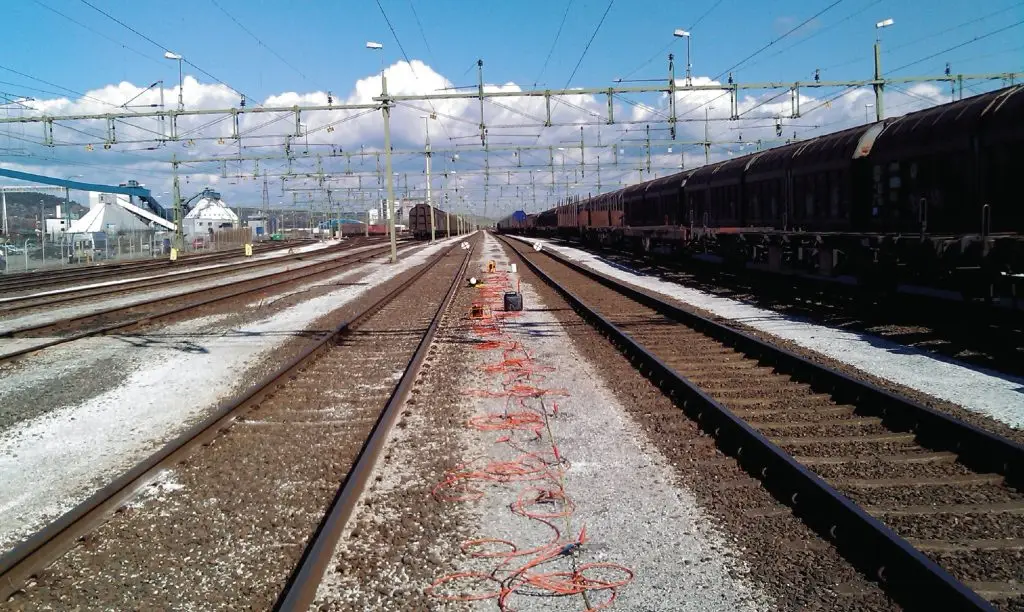
Before construction
Resistivity surveys can help with:
- Map geological conditions, including soil layers, clay and peat thickness, and depth to bedrock.
- Investigate bedrock conditions relevant to tunnelling.
- Identify wet zones and ground conditions that inform groundwater and drainage assessments.
For maintenance
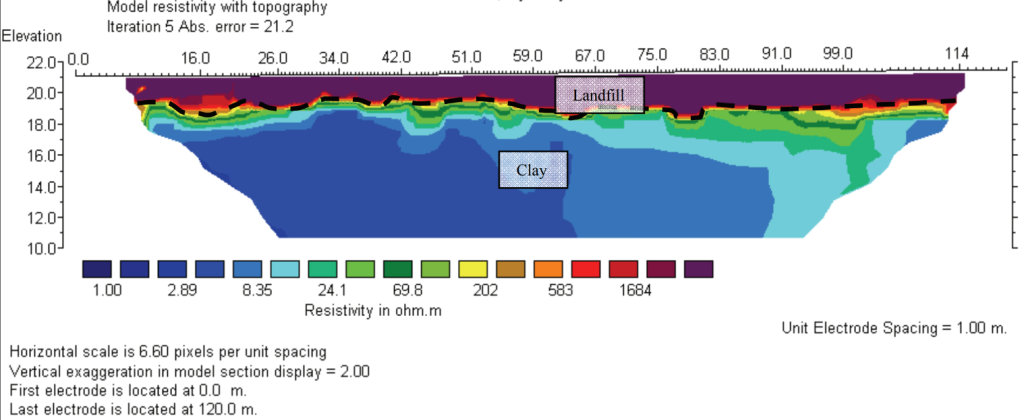
On existing railways, resistivity can support investigations of:
- Water-related problems: Changes in moisture within ballast, subgrade and embankments that may indicate a need to check drainage performance.
- Embankments and slopes: Internal moisture variations and changes in material properties associated with weak layers or erosion.
- Voids and subsurface anomalies: Features that require further investigation to establish their nature and extent.
- Long-term changes: Repeat surveys that help track developing moisture problems and changes in ground conditions as part of asset management.
- Monitoring conditions around geotextile layers: Changes in resistivity associated with moisture accumulation and fine material entering the ballast can help investigate conditions linked to mud pumping and impaired drainage. These findings can guide checks where a geotextile separator is absent or its separation and filtration functions may be compromised. Repeat surveys or automated monitoring can help track developing problems and support assessment of conditions following geotextile installation.
Because resistivity responds to material type, water content and pore-water chemistry, results need to be interpreted alongside geological and site information. This context helps distinguish between the possible causes of a measured change.
Find out more about the Method: Electrical resistivity
Seismics for Railway Investigations
Seismic methods are commonly used before railway construction to investigate geological conditions and ground stiffness. For example, multichannel analysis of surface waves (MASW) provides shear-wave velocity information that can help identify variations in stiffness along a proposed route.

Seismic surveys use the propagation of elastic waves to investigate subsurface layers and their properties. They can support railway site characterisation and investigations of changing ground conditions.
Before construction
Depending on the seismic technique selected, surveys can help:
- Assess ground stiffness and identify softer layers that may deform under load.
- Compare conditions before and after compaction.
- Determine depth to bedrock and investigate other geological layers.
- Assess bedrock conditions relevant to tunnelling.
- Support vibration hazard assessments.
- Support rippability assessments to inform excavation planning.
From a recent seismic survey before building a new high-speed railway
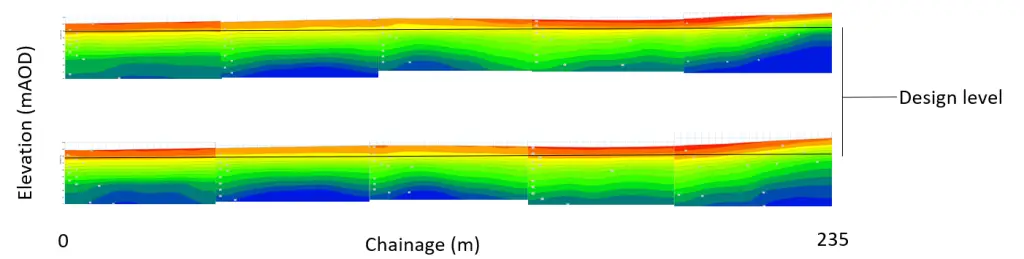
- Minimum recorded shear wave velocity at design level = 260 m/s which relates to Rayleigh wave velocity of approximately 236 m/s.
- Fastest design speed of train is 100 m/s.
- The potential for critical velocity effects is clearly understood from the seismic results.
For maintenance
- Investigate changes in subgrade stiffness associated with track deformation.
- Compare repeat measurements to assess changes over time.
- Contribute ground-property information to embankment and slope assessments.
- Assessing ground support beneath geotextile-treated sections: Seismic velocity contrasts associated with variations in ground stiffness can help investigate weakened support beneath the track bed. Where mud pumping or ballast intrusion is suspected, this information can help prioritise checks of the underlying ground and geotextile separation measures. Comparing measurements before and after remedial work can support assessment of improvements in ground stiffness and subsequent changes over time.
Find out more about the Method: Seismic methods
Choose the methods around your railway project
GPR, resistivity and seismics answer different questions. Combining suitable methods with geotechnical investigation can help distinguish track bed changes from deeper geological or moisture-related conditions.
Start with the engineering question, expected ground conditions, target depth and available access. Use the resulting profiles to prioritise direct checks and communicate findings along the route.