Challenge: Getting Students Excited to come to Class
Like many universities, the University of Nevada, Reno, continually looks for ways to boost student recruitment and retention and prepare undergraduates for the workforce. Unlike other schools, UNR has a campus in majestic Lake Tahoe. UNR Geophysics Professor Christopher Kratt saw an opportunity to get students excited about coming to university and also give them valuable hands-on experience in the field.
Solution: Integrating ABEM Technology into Undergraduate Fieldwork
In 2024, Kratt developed a pilot field experience that would introduce freshmen to geophysical site characterization around the Lake Tahoe campus. He recalls telling students on recruiting tours about the instrumentation they’d have access to and the applications they’d explore during their first weeks of school.
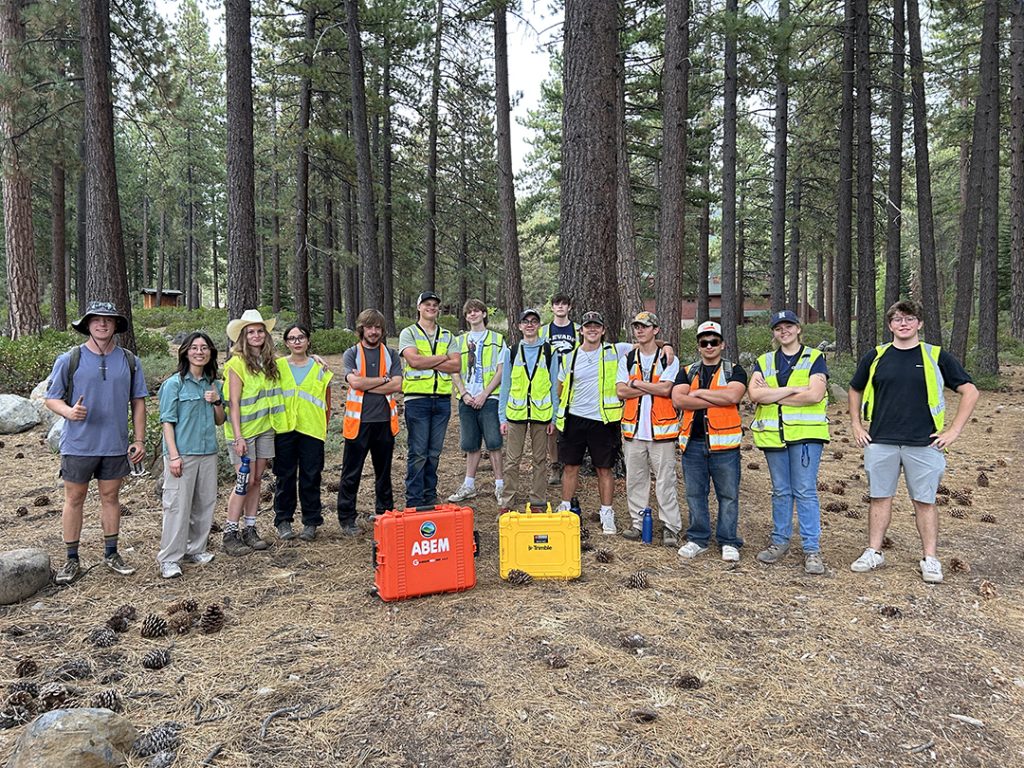
“Many of them got excited about that,” says Kratt. “They liked the idea of getting outdoors and doing the work.” In the fall, freshmen arrive at the university a week early to get familiar with campus. Kratt gives a brief, outdoor instrument demo on the Reno campus and invites them to take advantage of the opportunity at Lake Tahoe. “Out of about 40 students I see at the intro, perhaps a dozen of them want to come up to learn more,” he says. Those who participate investigate subsurface characteristics using seismic and Electrical Resistivity Tomography (ERT) methods.
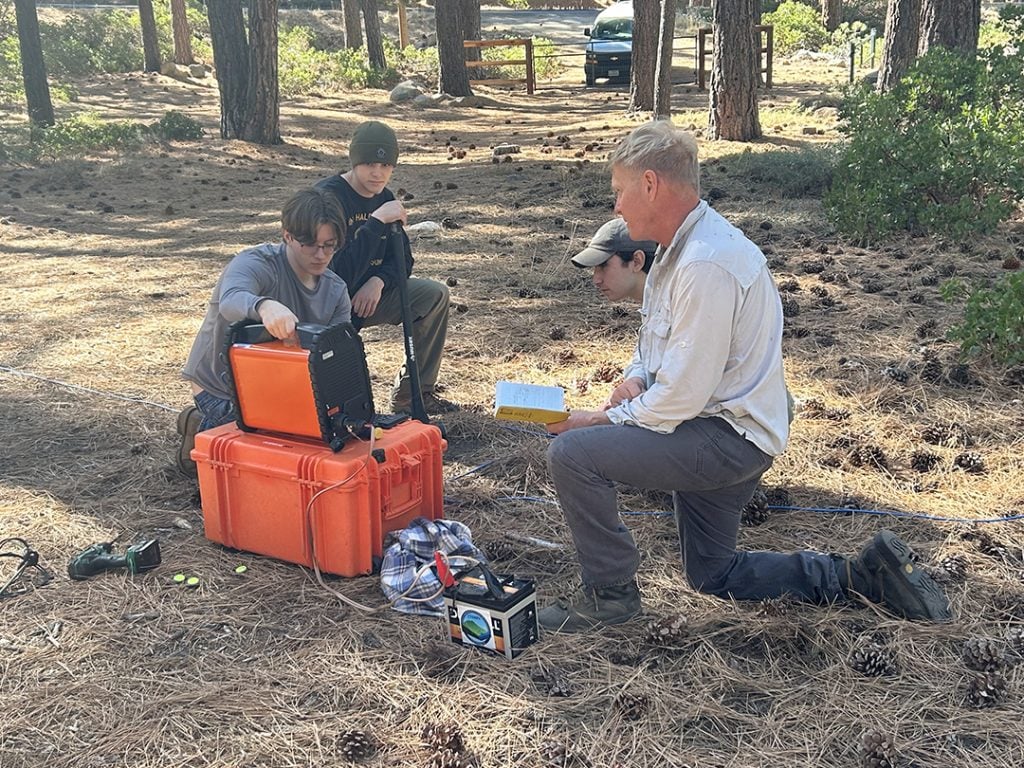
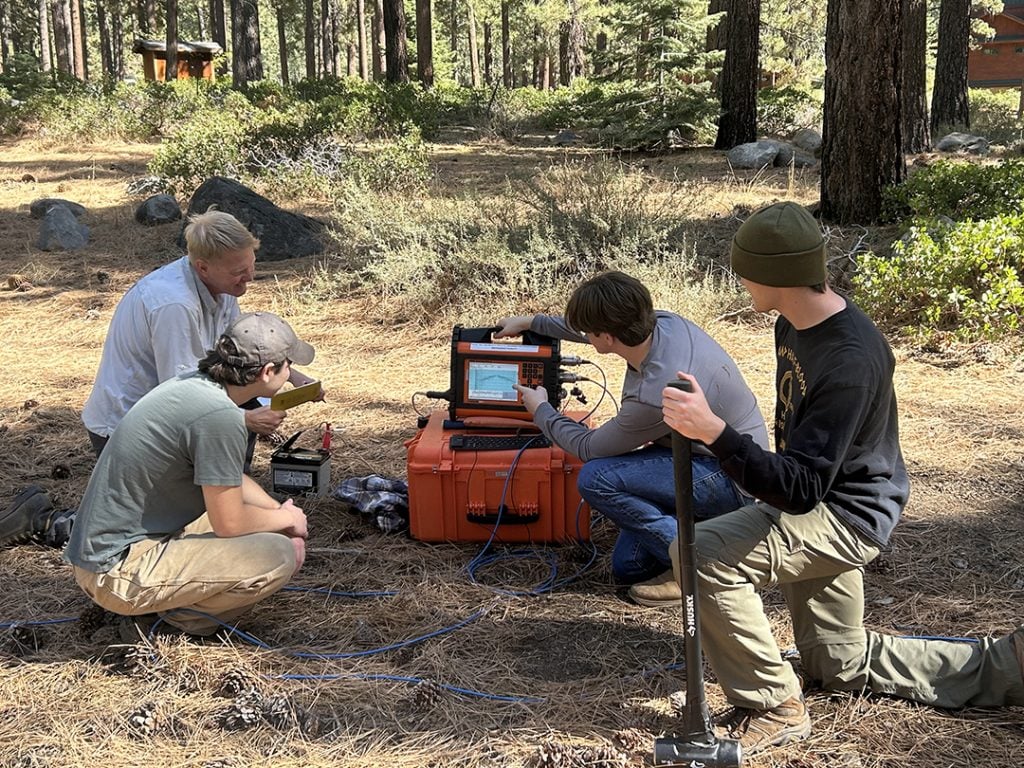
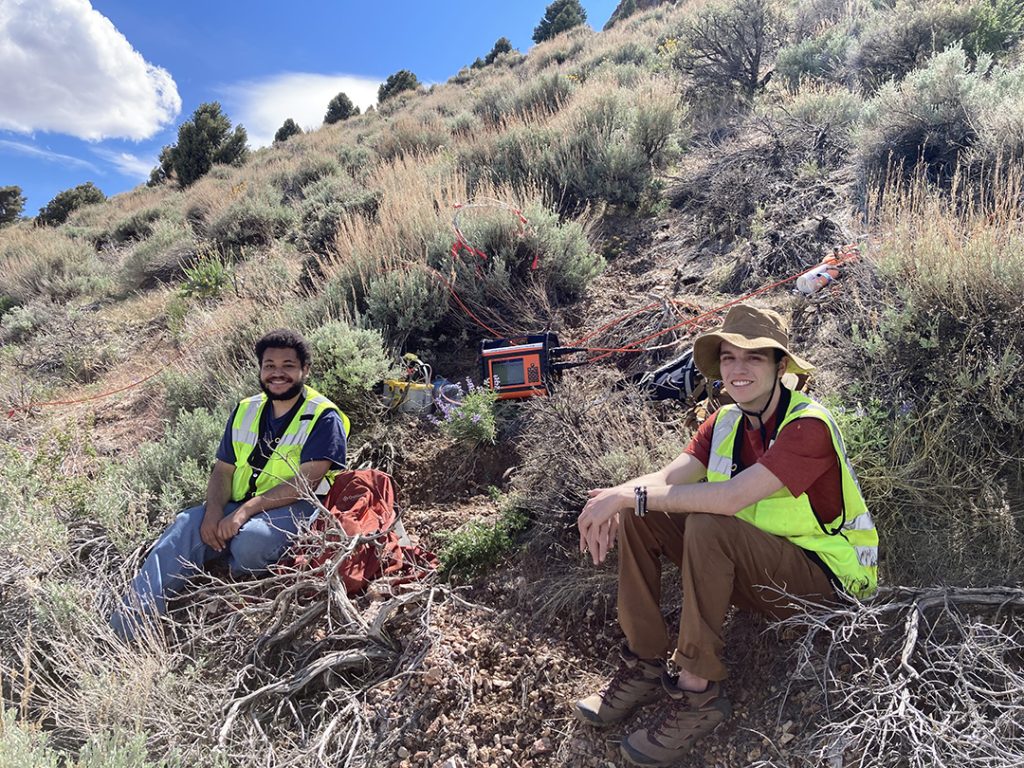
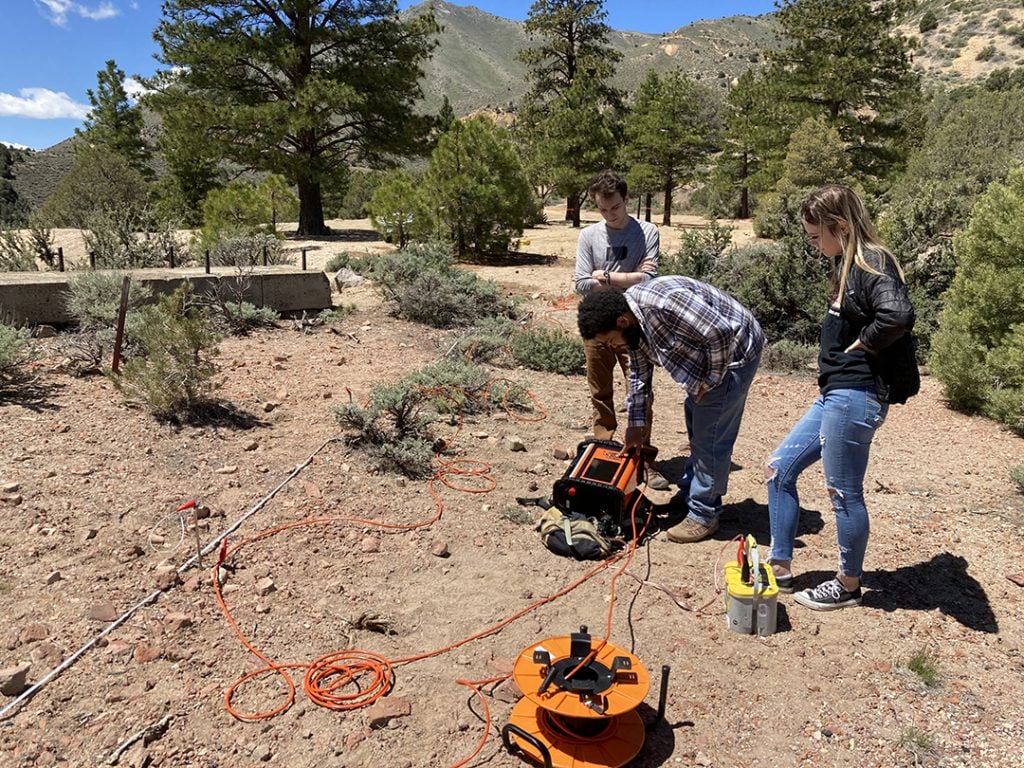
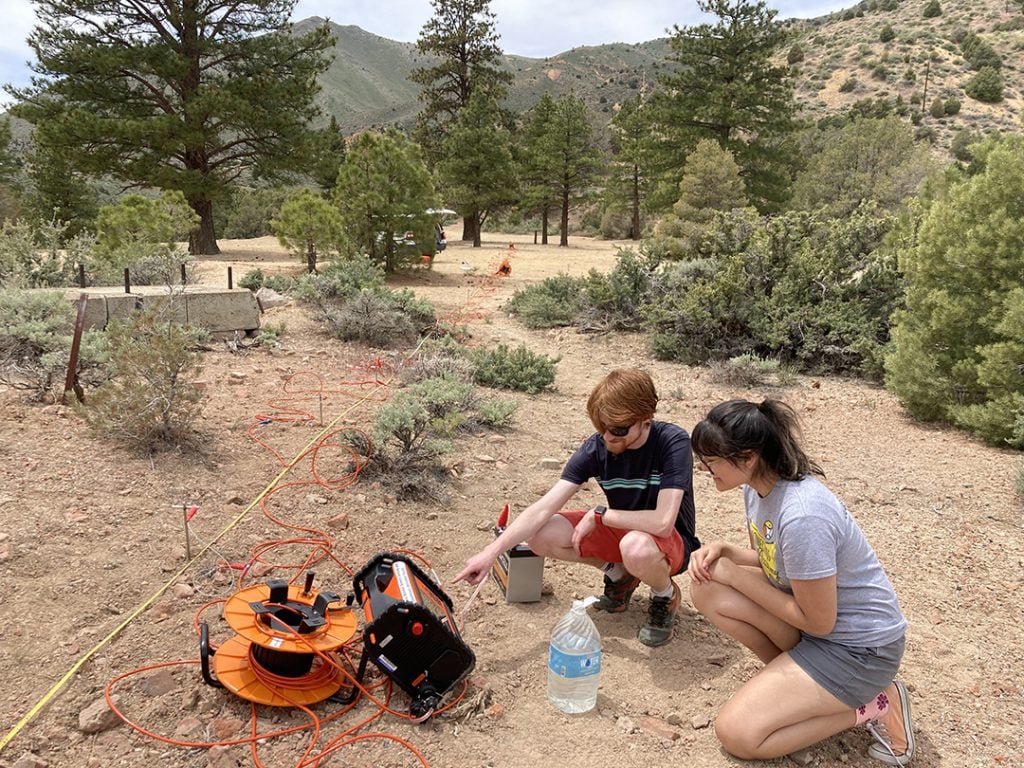
For the resistivity surveys, Kratt gives students access to the university’s ABEM Terrameter LS 2. The money to purchase the equipment was generously donated by Reno resident Hugh Roy Marshall who maintains an interest in supporting UNR student experience in the geosciences. He has made donations for three other geophysics instruments, including a ABEM Terraloc Pro 2 seismograph.
Kratt made the ABEM purchase based on prior experience. Twenty years earlier, as an undergraduate student in New Hampshire, he took a Geology 101 class and loved it. He got a summer job with a groundwater exploration company, and they had just purchased the ABEM resistivity unit with cabled array and metal electrodes.
“Since then, the system has improved,” says Kratt. “But I knew how it worked, and I thought it would benefit the students in the geophysics class. We also have a strong geological engineering program where we use both the resistivity technique and the seismic recorder.”
For Kratt, it was an easy choice. “Because of my early experience with ABEM, I knew it was user friendly, and Guideline Geo has really well-done training videos that I encourage the students to watch,” he says. “Guideline also has good continuity in terms of support information and multiple instruments with similar form factors, which appealed to me.”
Results: Career Pathways and Global Research Opportunities
Professor Kratt’s Lake Tahoe hands-on opportunity with geophysics is now in its second year and momentum is growing. “The equipment is great for training, and it’s exciting for the students to leave the classroom and lab and get outside,” he says. It’s also good marketing for the university. “This experience touches so many different majors: Mining Engineering, Geological Engineering, Geophysics, Hydrology and straight up Geology majors,” says Kratt. “We visit the Tahoe campus three times during the fall semester for the freshmen, and now a few have come back as upperclassmen to help lead the experience.”
Students get a glimpse of viable career paths that could take them to interesting places. And some even get paid for their efforts: To help develop an applicant pool, Mission Support and Test Services, based at the Nevada National Security Site, funds stipends for students to do geophysical research and develop poster presentations.
Additionally, in 2026, three of Kratt’s students will travel to Chile as part of a five-year National Science Foundation-funded project to survey a hydrothermal system that has been developing on a volcano after a 2011 eruption. Led by Dr. Philipp Ruprecht, a volcanologist at the university, the students will use the Terrameter LS 2 to explore upwelling zones, the shallow hydrothermal system, and perhaps the neck of the vent.
Kratt says near-surface features that they’re able to map will complement other geophysics data being acquired. Findings could reveal how the volcano is evolving and whether it has internal zones of weaknesses that could fail causing landslides in the future. He’d like to see their results published in a scientific journal.
For Kratt, there’s great satisfaction in the spark of an idea that led to a freshman geophysics experience that, for some, will lead to a fulfilling career. “It’s just great that we have the facility and the equipment to introduce these kids to geoscience in such an engaging way,” he says.